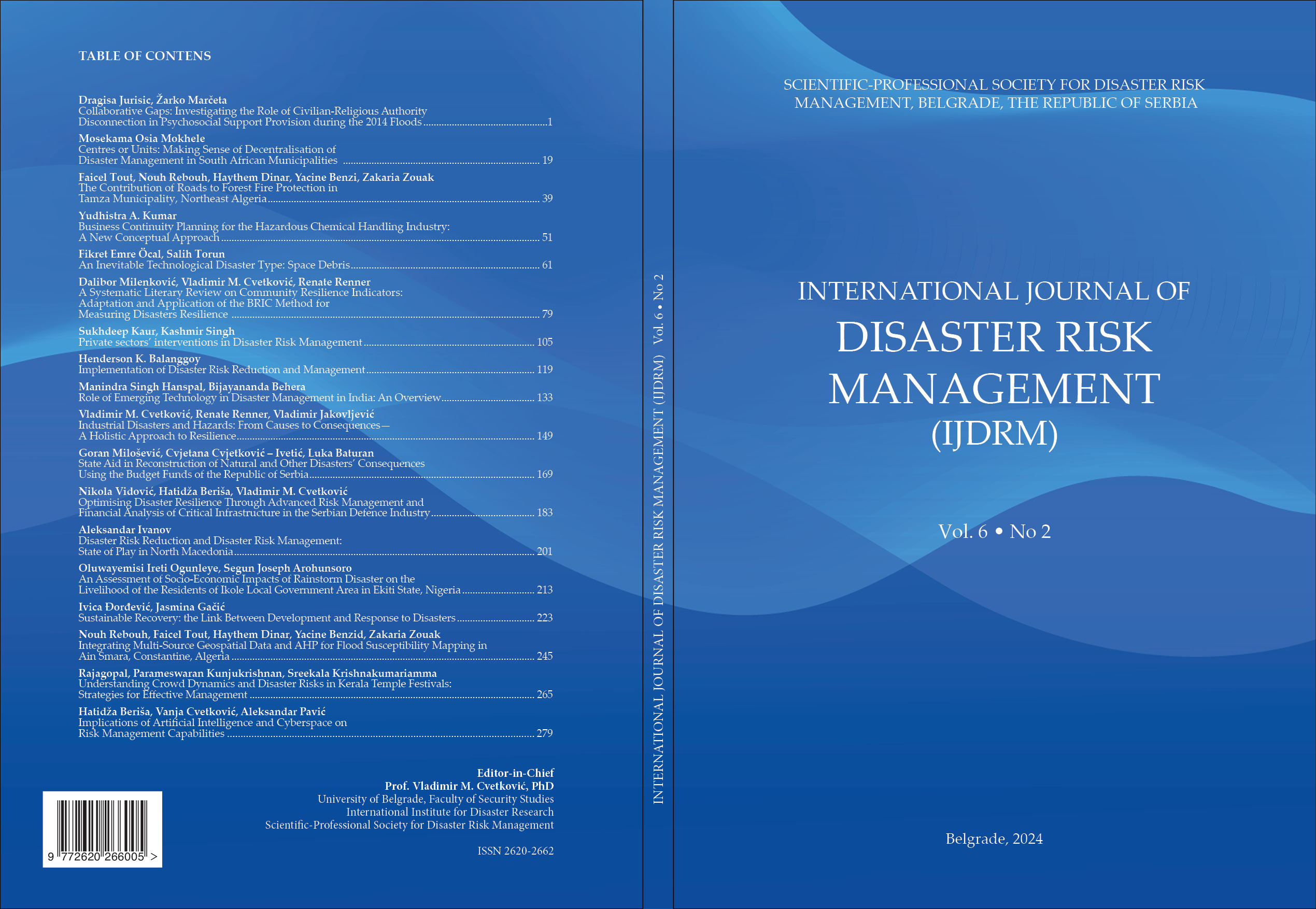
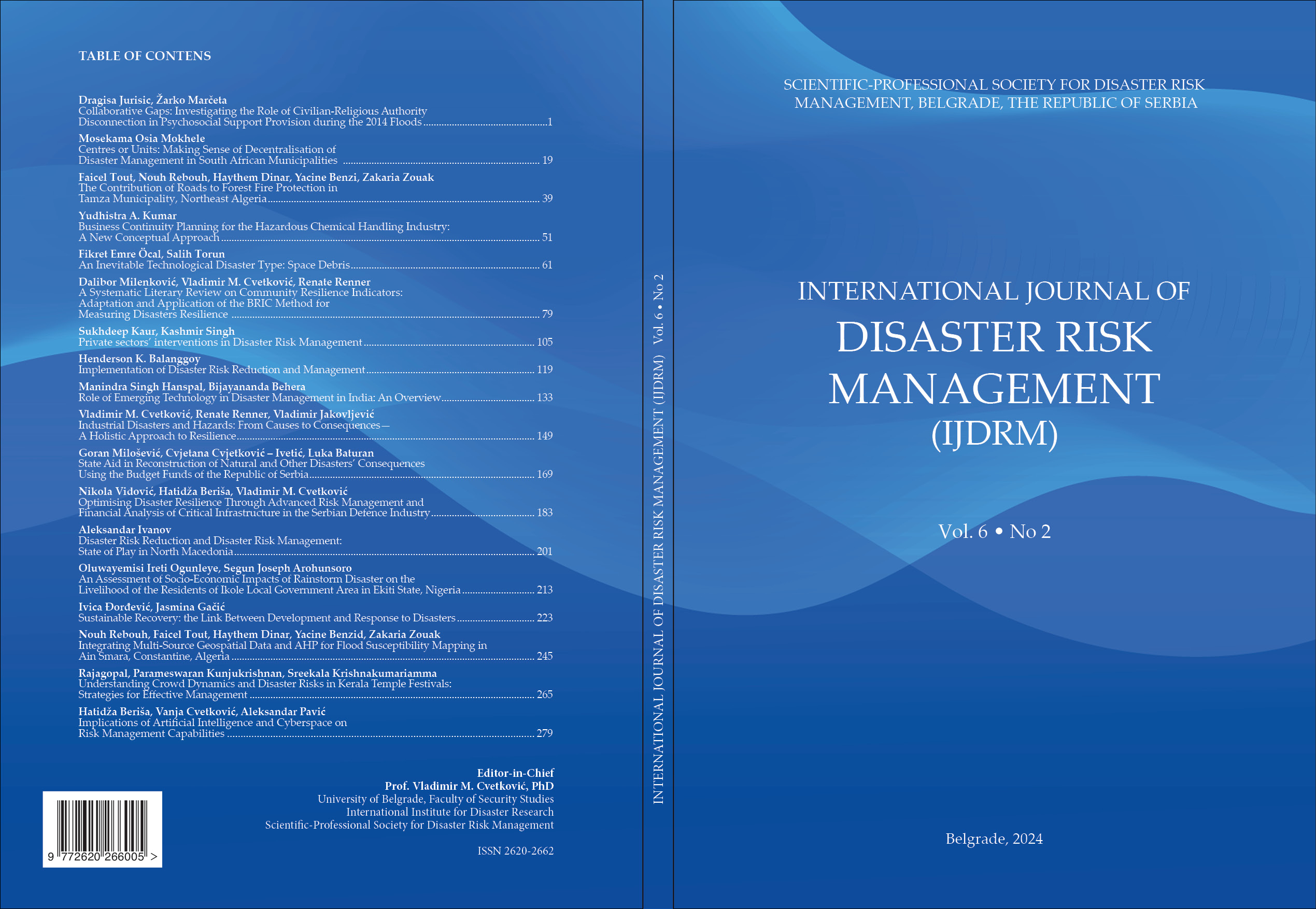
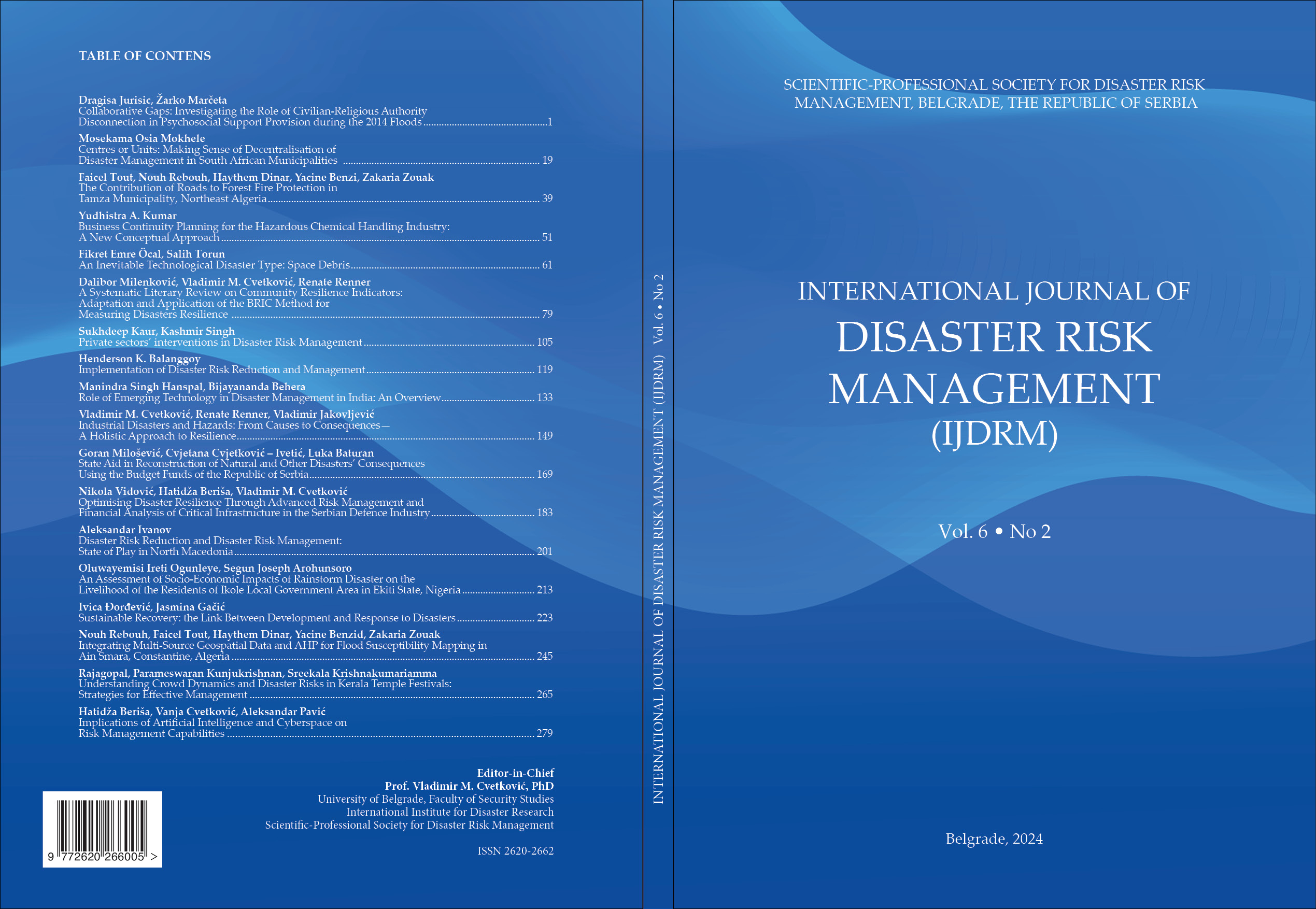
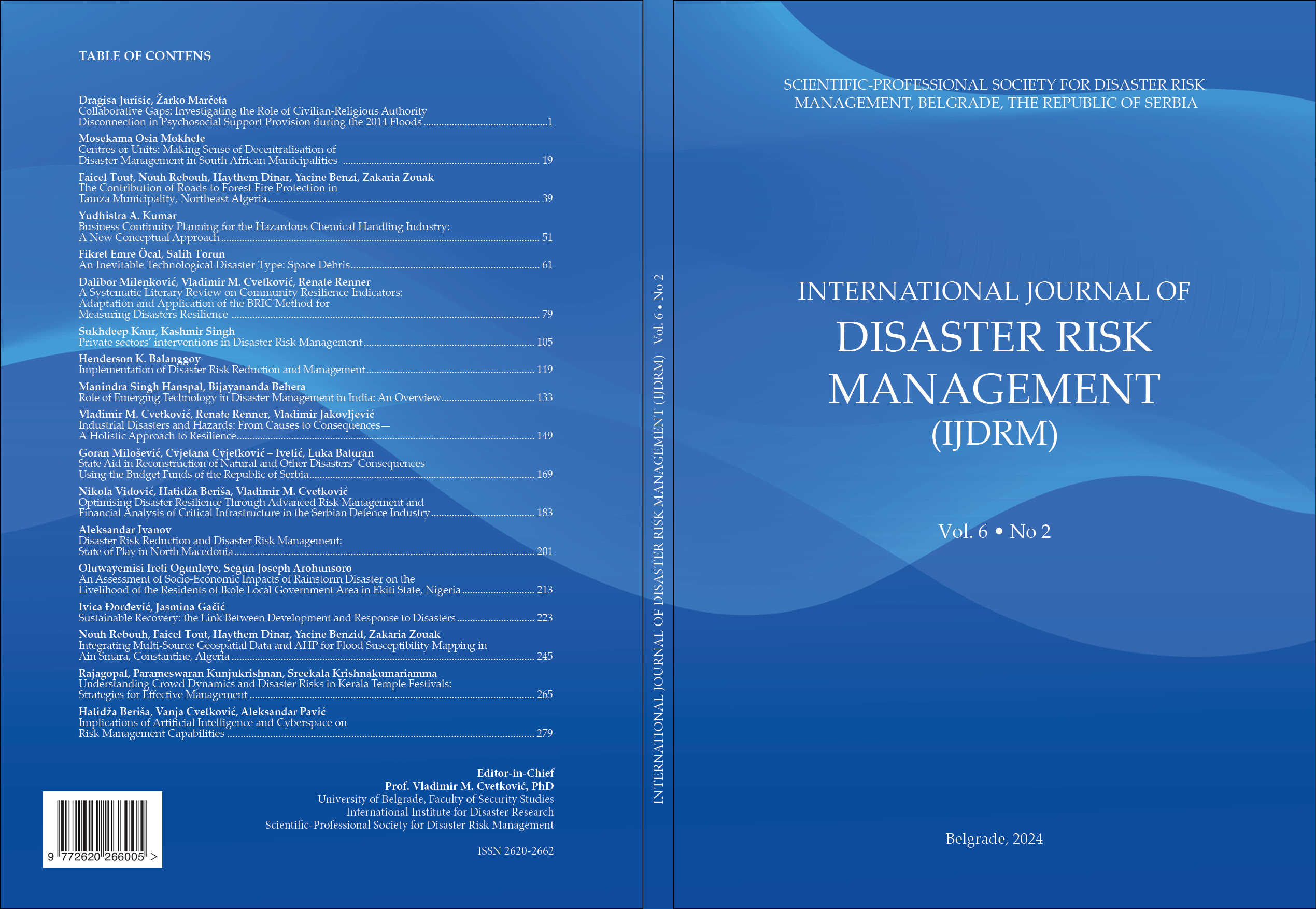
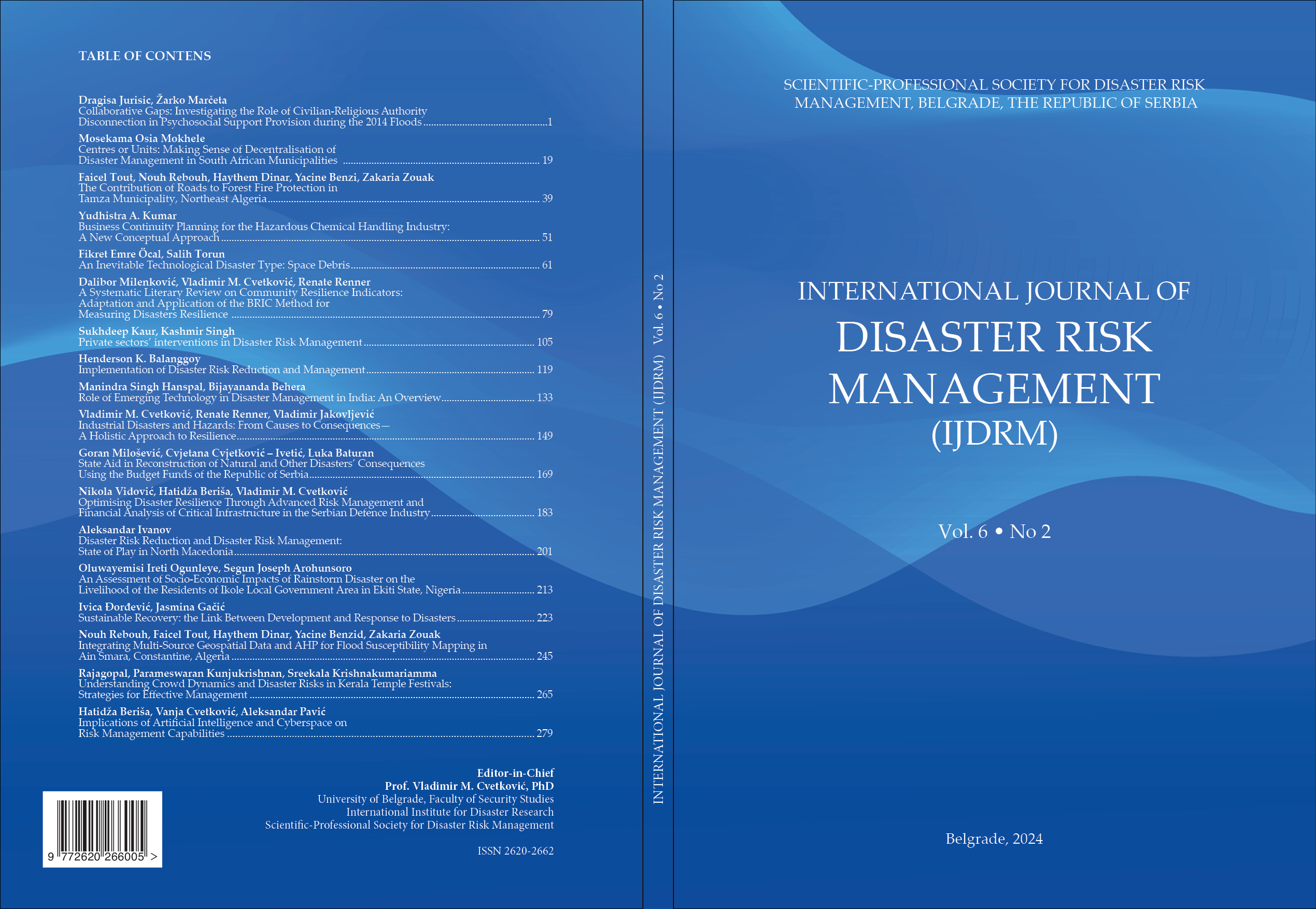
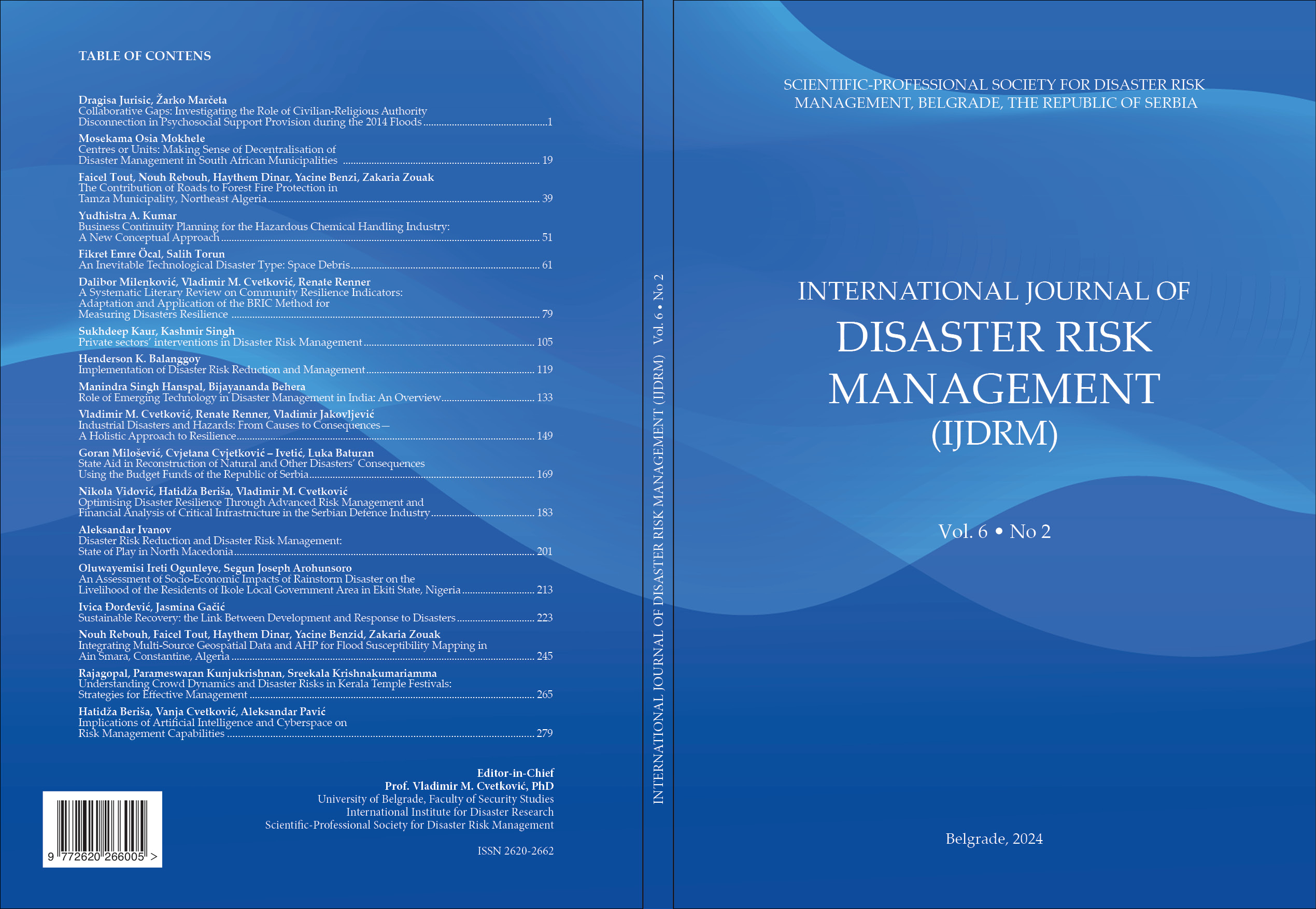
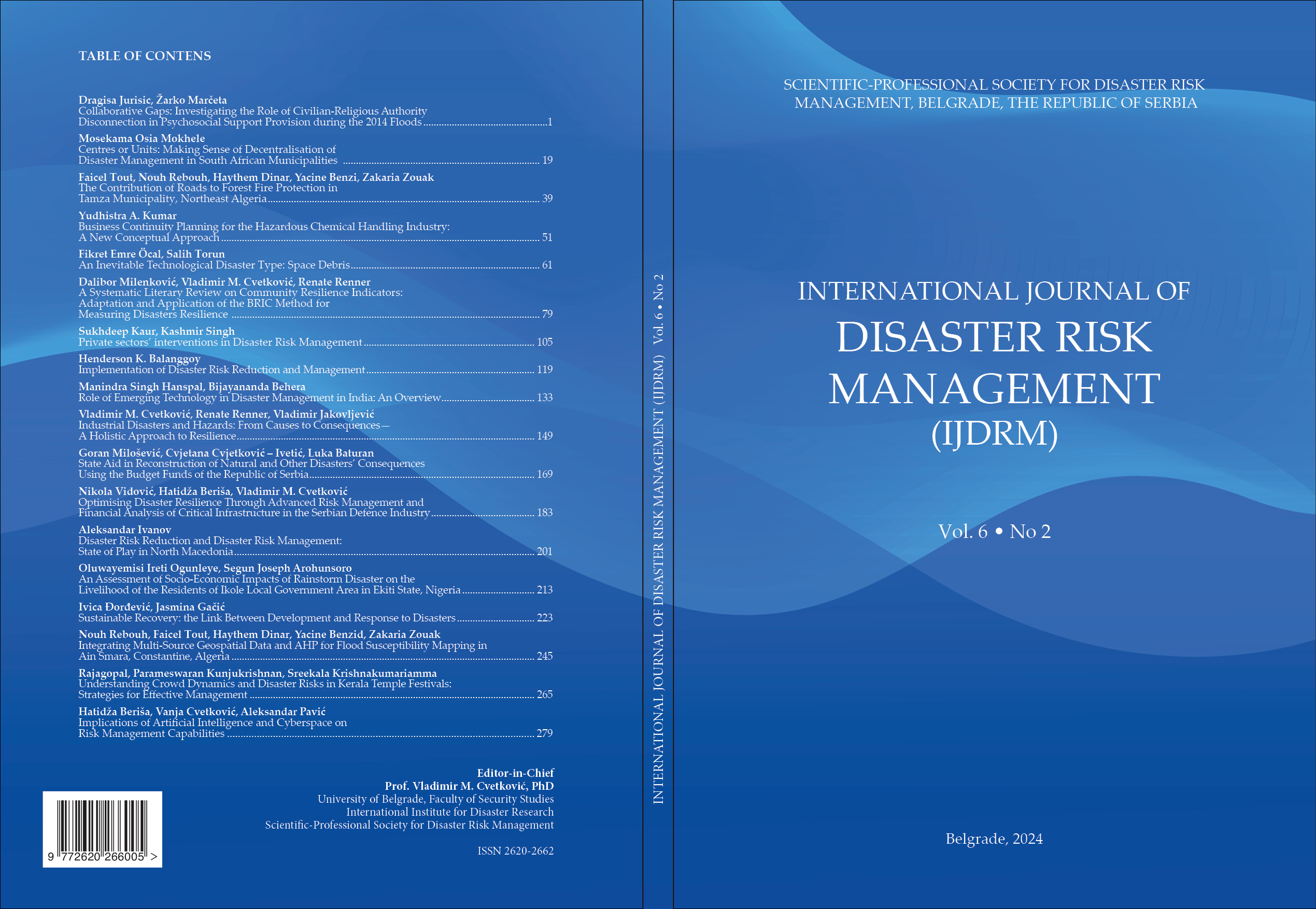
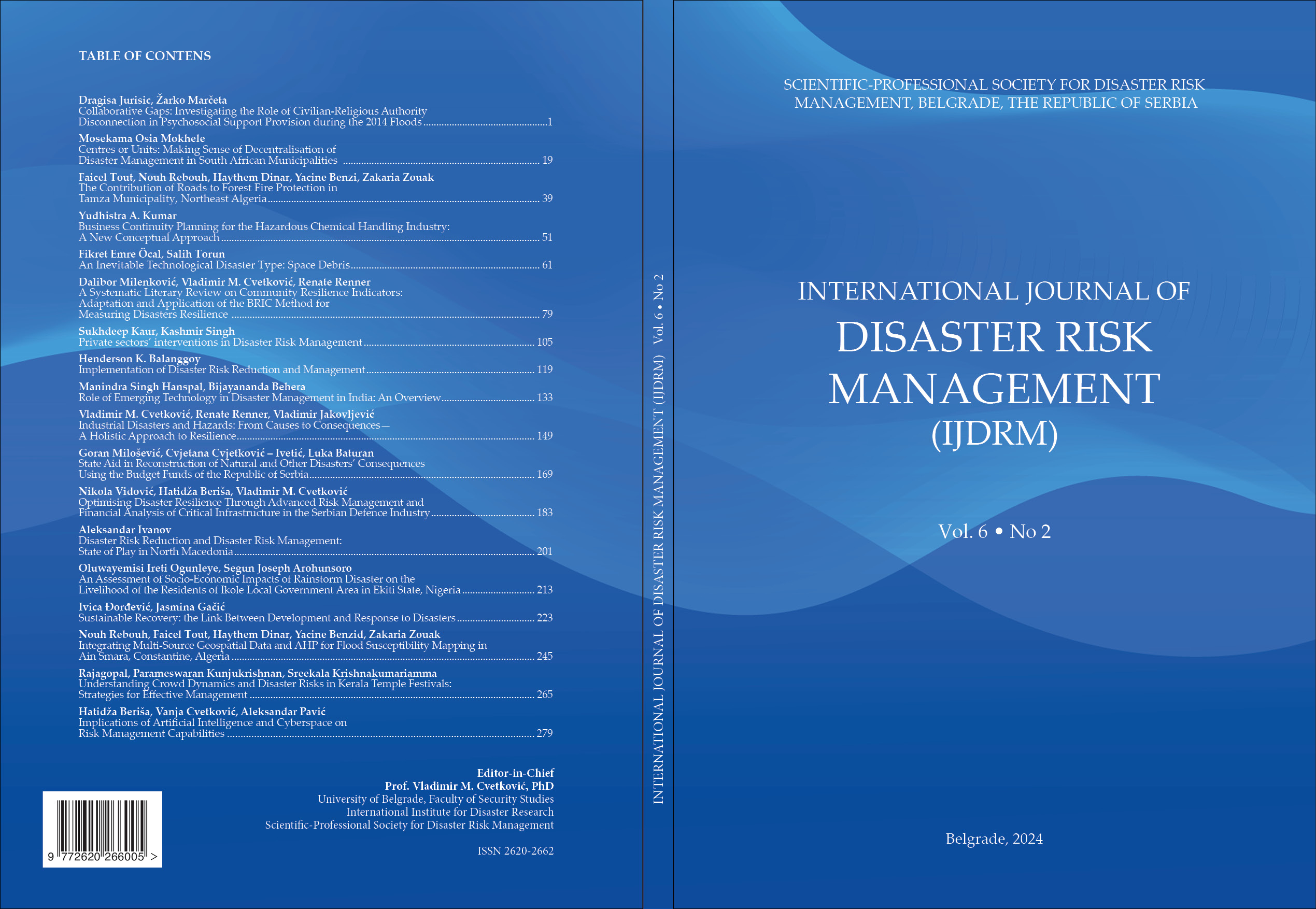
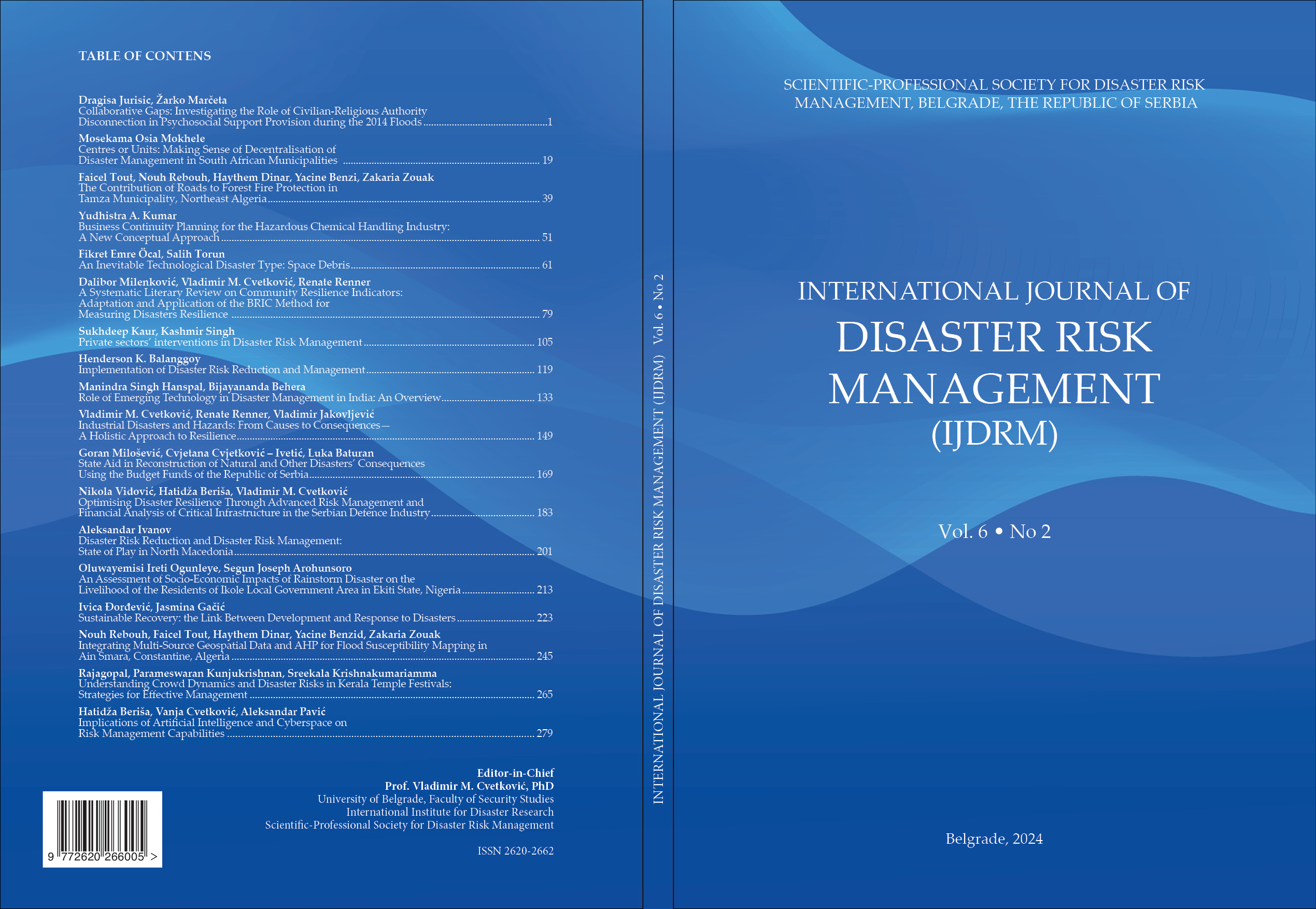
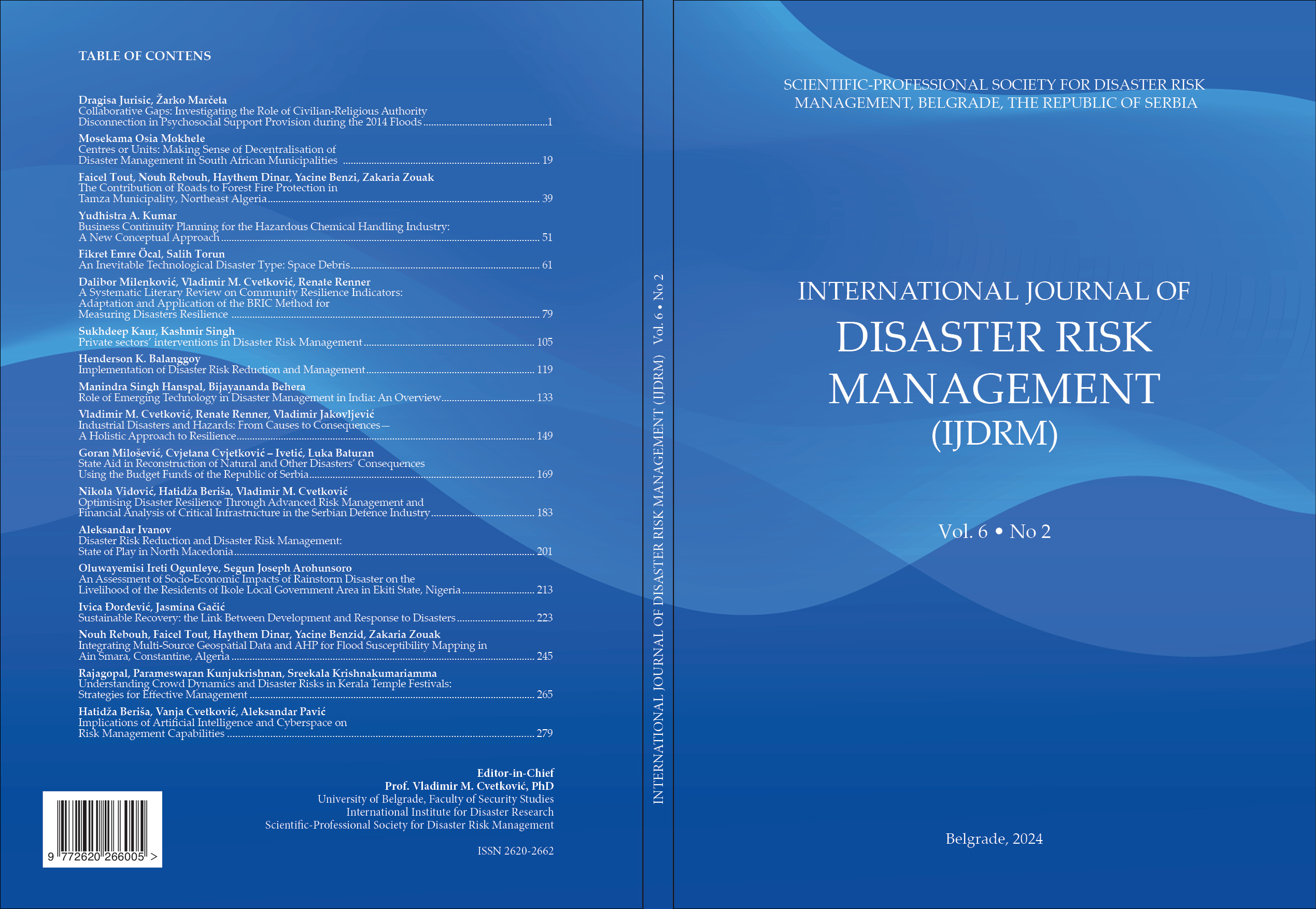
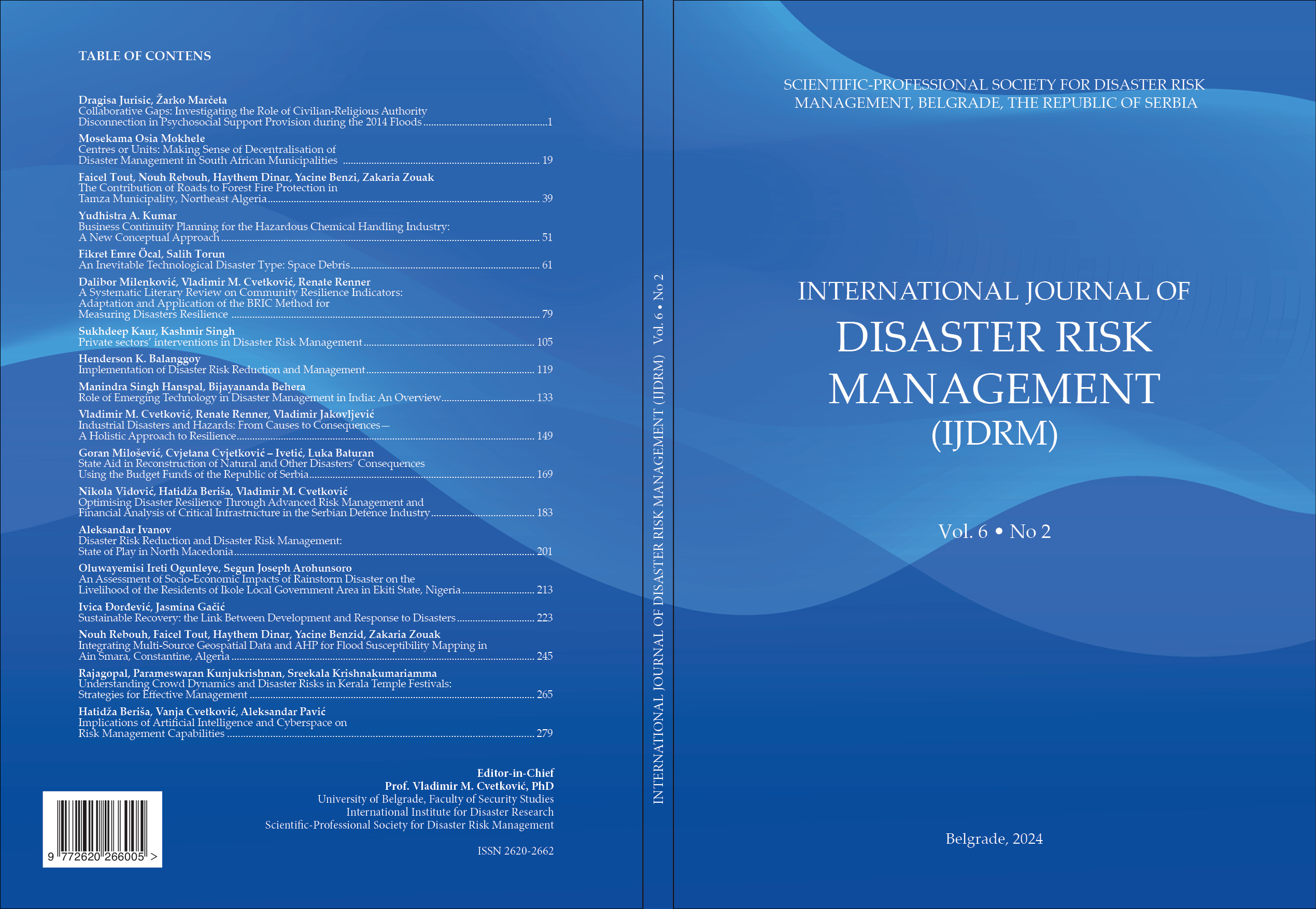
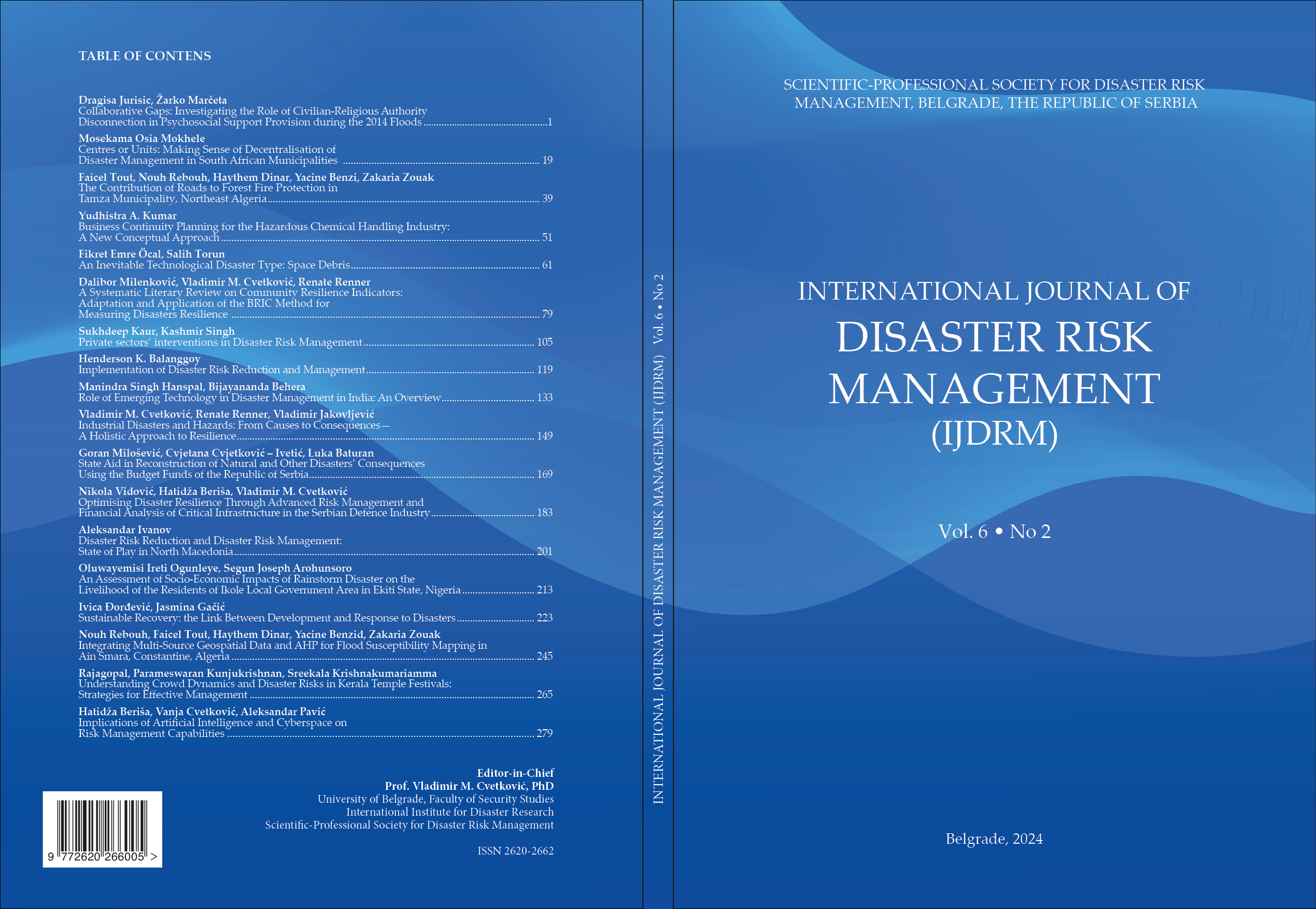
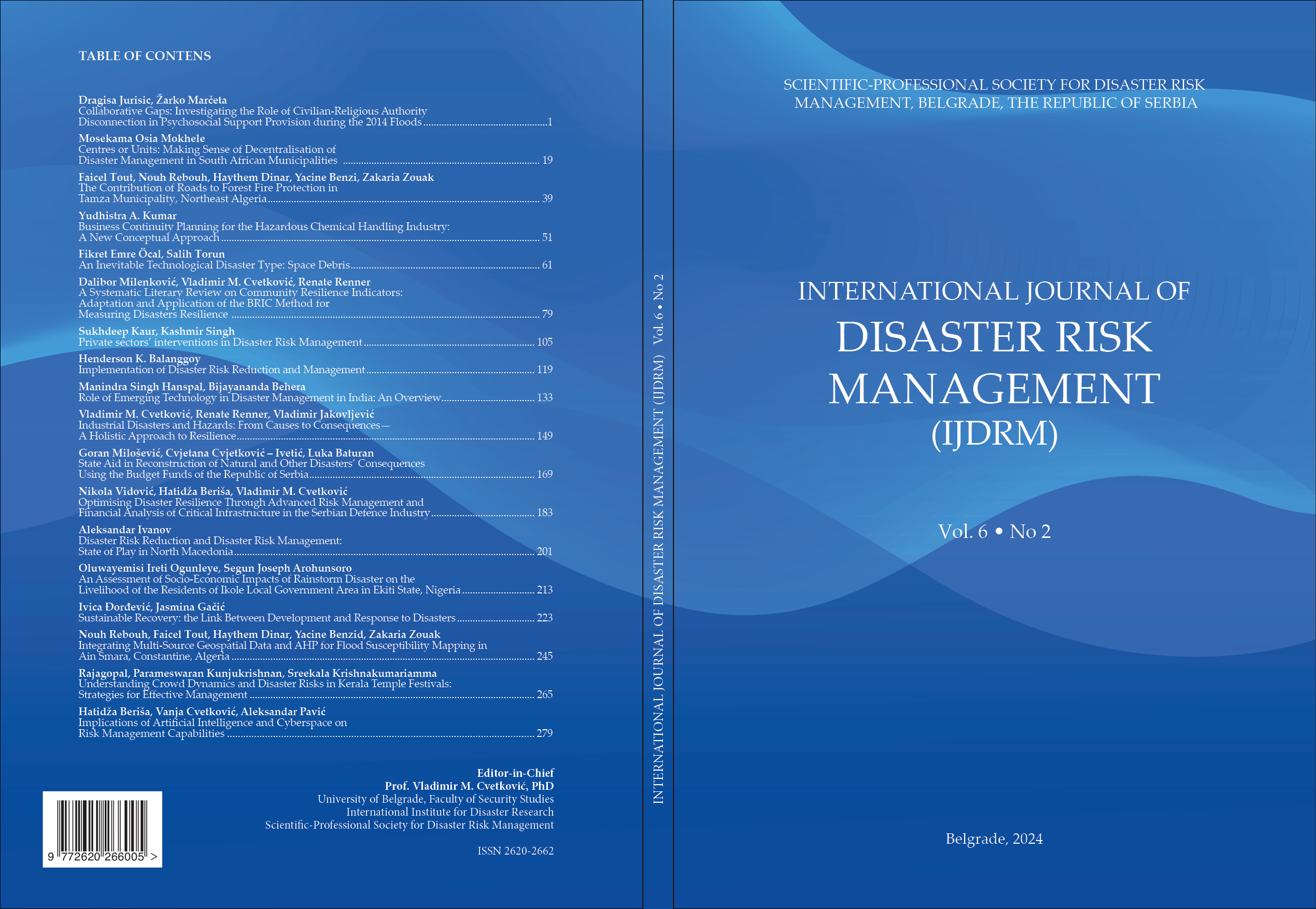
Vol. 6 No. 2 (2024): International Journal of Disaster Risk Management (IJDRM)
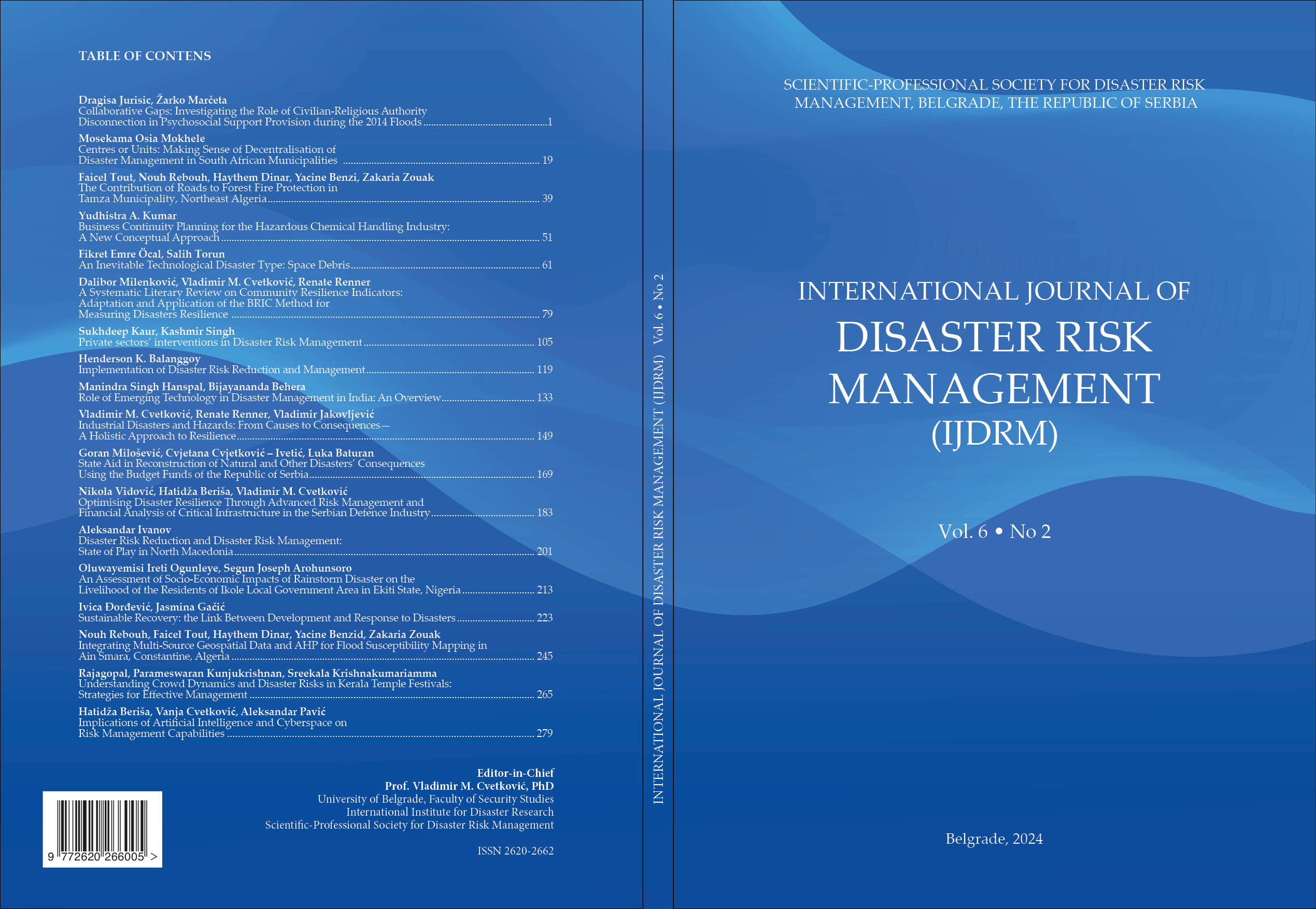
Published papers: 1) Collaborative Gaps: Investigating the Role of Civilian-Religious Authority Disconnection in Psychosocial Support Provision during the 2014 Floods; 2) Centres or Units: Making Sense of Decentralisation of Disaster Management in South African Municipalities; 3) The Contribution of Roads to Forest Fire Protection in Tamza Municipality, Northeast Algeria; 4) Business Continuity Planning for the Hazardous Chemical Handling Industry: A New Conceptual Approach; 5) An Inevitable Technological Disaster Type: Space Debris; 6) A Systematic Literary Review on Community Resilience Indicators: Adaptation and Application of the BRIC Method for Measuring Disasters Resilience; 7) Private sectors’ interventions in Disaster Risk Management; 8) Settings Implementation of Disaster Risk Reduction and Management; 9) Role of Emerging Technology in Disaster Management in India: An Overview; 10) Industrial Disasters and Hazards: From Causes to Consequences—A Holistic Approach to Resilience; 11) State Aid in Reconstruction of Natural and Other Disasters’ Consequences Using the Budget Funds of the Republic of Serbia; 12) Optimising Disaster Resilience Through Advanced Risk Management and Financial Analysis of Critical Infrastructure in the Serbian Defence Industry; 13) Disaster Risk Reduction and Disaster Risk Management: State of Play in North Macedonia; 14) An Assessment of Socio-Economic Impacts of Rainstorm Disaster on the Livelihood of the Residents of Ikole Local Government Area in Ekiti State, Nigeria; 15) Sustainable Recovery: the Link Between Development and Response to Disasters; 16) Integrating Multi-Source Geospatial Data and AHP for Flood Susceptibility Mapping in Ain Smara, Constantine, Algeria; 17) Understanding Crowd Dynamics and Disaster Risks in Kerala Temple Festivals: Strategies for Effective Management; 18) Implications of Artificial Intelligence and Cyberspace on Risk Management Capabilities.
Published:
2024-12-25